Introducing the "App Gap"
In my time in technology development, there’s always been a “missing middle”…call it the “App Gap.”
On one side, we’ve got the productivity tools we all live in: Sheets. Docs. Slides. Email. Calendar.
On the other side, we’ve got enterprise apps: Salesforce. Workday. Jira. Systems of record.
For the most common tasks, we buy enterprise systems.
For everything else, we shoe-horn the task into a productivity application.
We duct-tape roadmaps into spreadsheets.
We manage strategy in slide decks.
We run “systems” inside a wiki or a doc.
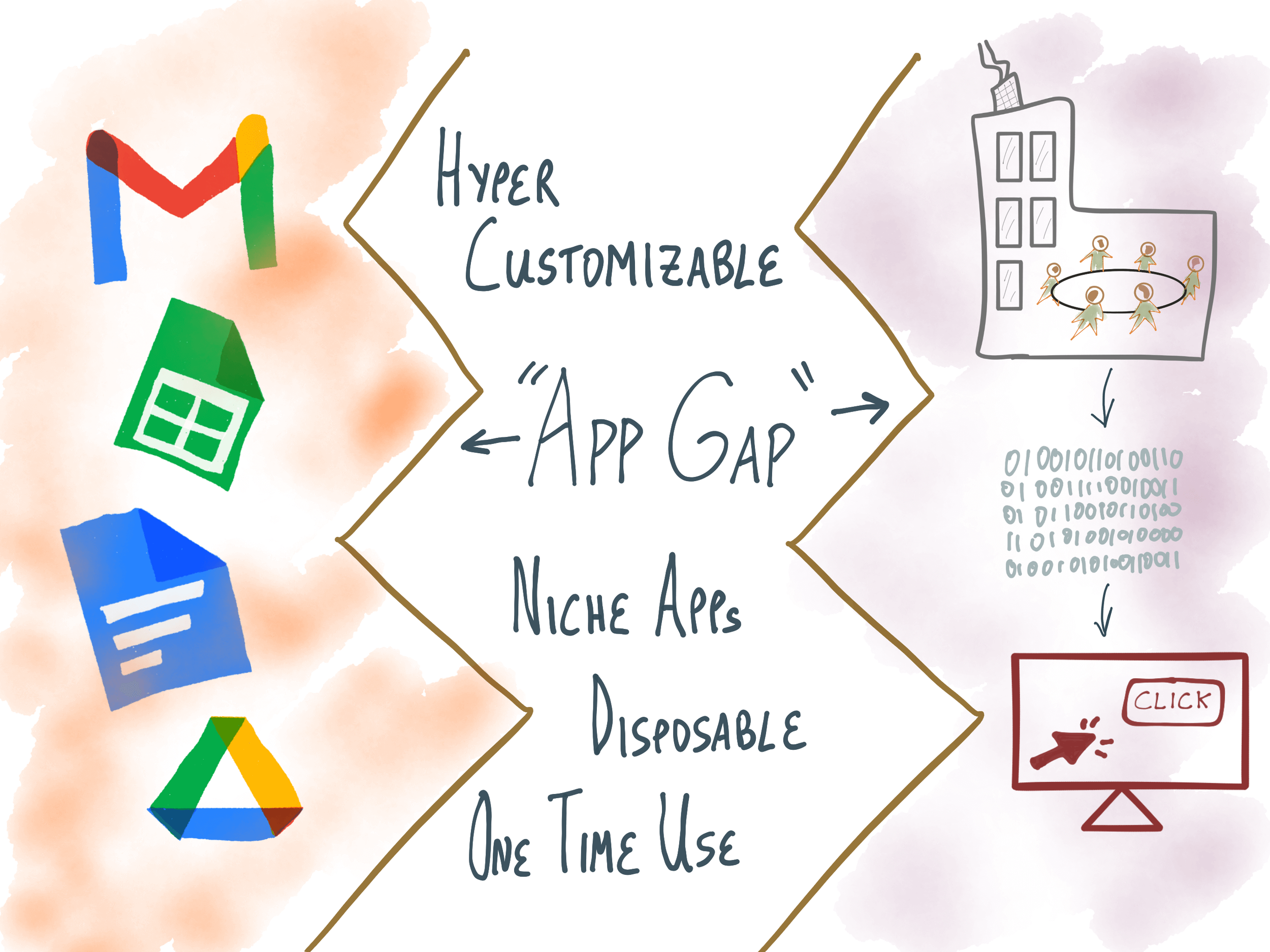
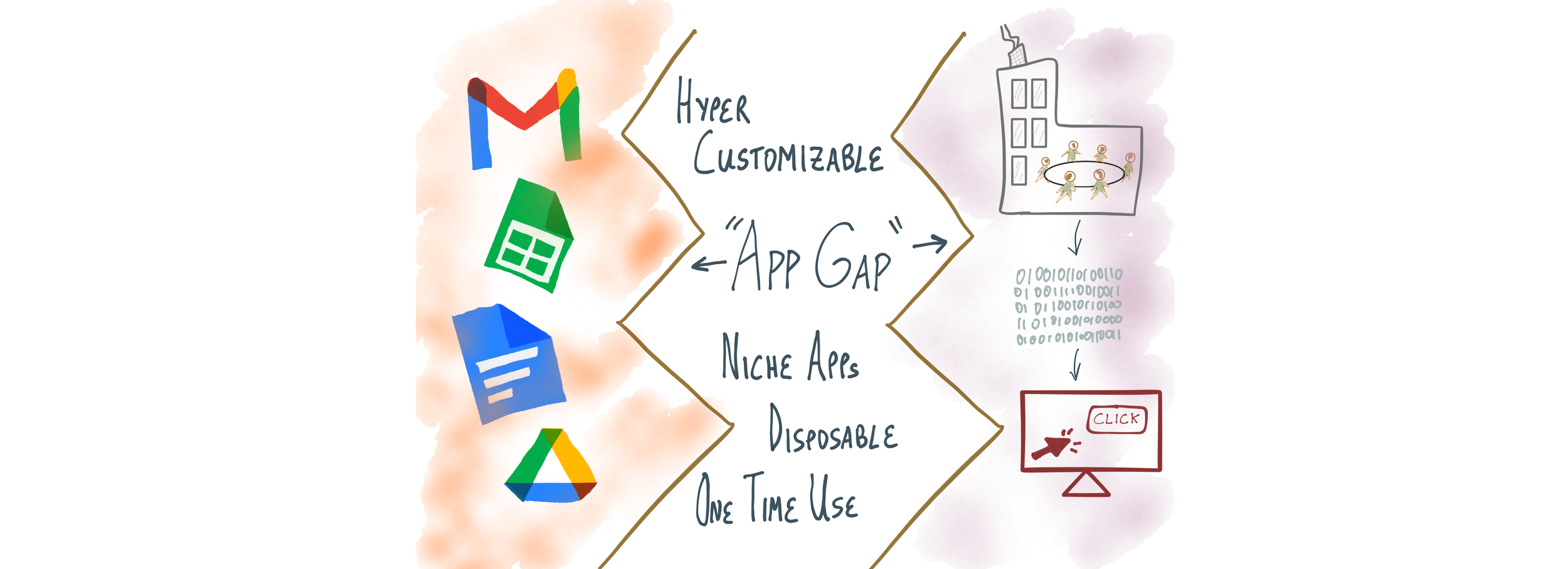
Here’s the shift we'll see in 2026...we’re going to start filling the "App Gap" with micro-apps:
Hyper-customizable apps that match your workflow
Disposable apps you use for a month and throw away
One-time apps that solve one annoying problem once
We need these niche approaches because product management isn’t one-size-fits-all. It changes by industry, business model, team topology, tech stack… and a thousand local constraints.
And some of these apps will be so good they will grow up to be the new enterprise apps (but on a smaller scale).
My example → Scheduling is death by a thousand cuts.
Every “do you have 30 minutes next week?” email costs me 5–10 minutes.
Multiply that across a week and it’s just… wasteful.
So I built a tiny tool that lets me chat with my calendar and copy/paste clean availability into email or Slack.
No engineering team. No design sprint. No roadmap committee.
Just solve the problem → save the time. Get feedback from real usage.
Is it perfect? Nope. Getting LLMs to understand dates/times = chaos.
But it saves me ~20 minutes/day and that’s sweet!
What's a tiny app you've built to solve the "App Gap"?
More for Product Leaders










Jim coaches Product Management organizations in startups, growth stage companies and Fortune 100s.
He's a Silicon Valley founder with over two decades of experience including an IPO ($450 million) and a buyout ($168 million). These days, he coaches Product leaders and teams to find product-market fit and accelerate growth across a variety of industries and business models.
Jim graduated from Stanford University with a BS in Computer Science and currently lectures at University of California, Berkeley in Product Management.